
WinCrown · Welcome bonus200 free spins on selected slots
Reviews (9,827)
4.9Rating
FIELD GUIDE / FILE 29
 Best casinos available in AustraliaUpdated 7 November 2026
WinCrown · Welcome bonus200 free spins on selected slots
Reviews (9,827)
4.9Rating
A $1 casino deposit is possible at a small number of sites, usually on one specific payment route or as part of a one-off promotion, not as a standard cashier minimum. Once fees, currency conversion and withdrawal floors are counted, a single dollar is best treated as a paid look at a site's lobby rather than a bankroll. Here is where one-dollar deposits show up, what eats into them, and how to tell a genuine A$1 option from a banner that does not survive the cashier.
Most casinos set a general minimum deposit well above a dollar, because every deposit costs them a processing fee. When a $1 casino deposit does exist, it tends to come in one of three forms.
A promotional entry offerSome operators run a “deposit $1, get spins” style promotion for new accounts. The one-dollar figure applies only to that first, promotional deposit. After it, the normal cashier minimum returns. The promotion's own terms decide what the dollar unlocks, which games the spins are locked to and how winnings are treated.
A low-floor payment routeCertain methods, crypto above all, can carry a very low minimum because the casino is not paying a card processor's fixed fee. The catch moves to your side: the network fee to send the coin and the conversion at either end.
A list that is out of dateThe third form is the most common: a comparison list saying a site accepts $1 when it no longer does, or never did for Australian accounts. Minimums change with processors and promotions. A figure without a date and a method is not evidence.
There is also a simple commercial reason one-dollar minimums stay rare. Card and bank processors typically charge the casino a fixed amount per transaction on top of a percentage, so a dollar deposit can cost the operator more to process than it earns. When a casino does offer one, it is usually a marketing decision with limits attached — one per account, one method, one promotion — rather than a permanent feature of the cashier.
Before you sign up anywhere on the strength of a one-dollar claim, test the claim. It takes a few minutes and spares you an account at a site that will not take your dollar anyway.
Find where the number comes fromIs the one-dollar figure on the casino's own payments page, in a promotion's terms, or only on a third-party list? A figure that appears only off-site is the weakest kind of evidence. A figure in the casino's terms is better, but still needs to match the cashier.
Match it to a method and a dateA real minimum is attached to a method — “A$1 via a named route” — and the terms page usually carries a last-updated date. If the claim has neither, treat it as a historical note at best.
Ask support in writingSend a short chat message: “What is the minimum deposit for an AUD account using this method, and is there a fee?” Save the reply. If it contradicts the banner, you have learnt something useful about the site's consistency.
Let the cashier have the last wordLogged in, choose the method and type 1 into the amount field. Many cashiers show the minimum as soon as you select a method, or reject the amount with a message. That rejection is the only answer that cannot be out of date.
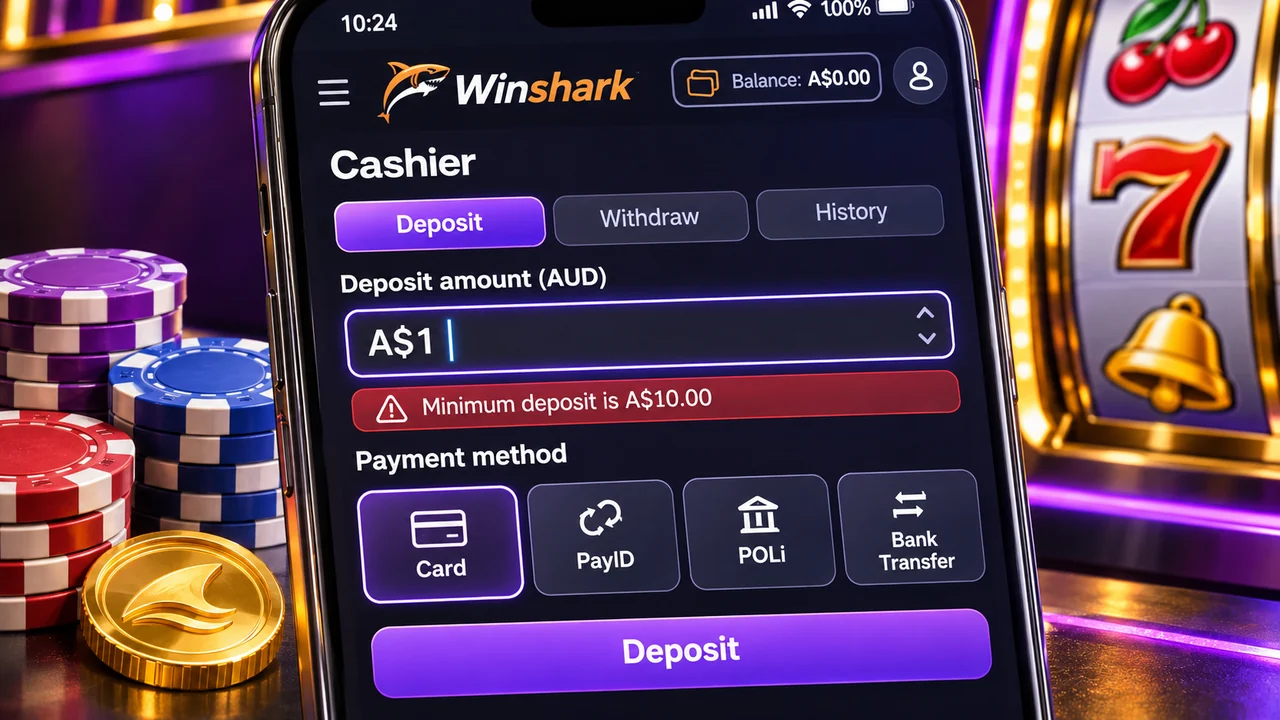
With a deposit this small, costs that would be rounding errors on A$100 become the main event. Run the numbers before you pay.
The cleanest case is an account held in Australian dollars, funded by a method charged in Australian dollars, with no fee. Anything else adds friction that matters at this scale. Our AUD and currency conversion page explains how to spot a foreign-currency charge before it reaches your statement.
Crypto and the one-dollar floorCrypto is where a $1 minimum is most likely to be real at the casino end and least likely to be worth it at yours. Network fees vary by coin and by how busy the network is; on some, sending a dollar's worth costs a meaningful share of a dollar. Exchanges also have their own withdrawal minimums, which can exceed one dollar. Our crypto deposits page and crypto versus card comparison set out the trade-offs, including how little recourse you have once a crypto payment is sent.
Even if a full dollar lands in your balance, many games will not accept it as a stake, or will take it in one go. Here is how A$1 tends to stretch across a typical lobby. Check minimum stakes in each game; they differ by title and by casino.
In practical terms, a single dollar is a pokies or instant-game deposit. If you wanted a look at the live casino, our live casino checklist explains why a larger balance is needed for that.
A note on 1c pokiesSome older-style pokies let you play a single line for a cent, but the total bet per spin is usually lines multiplied by coin value, so the “1c” label can mean 25c or more per spin once all lines are active. Read the total bet display, not the coin value.
The most common real-world $1 casino deposit is the promotional one: a dollar in, a set of free spins out. These offers can be decent value as a taste of a site, provided you read four lines of the terms.
Here is an example with round figures, not a quote from any operator: a dollar deposit gets 50 spins at 10c, so A$5 at face. If the spins return A$4 in bonus funds with 40× wagering, you would need to turn over A$160 before withdrawing. At 96% RTP, the theoretical cost of that turnover is about A$6.40 — more than the A$4 you are trying to release. The offer is still a cheap look at a game. It is not a cheap route to cash.
Our free spins value check and wagering maths in Australian dollars run the same arithmetic on other offer shapes.
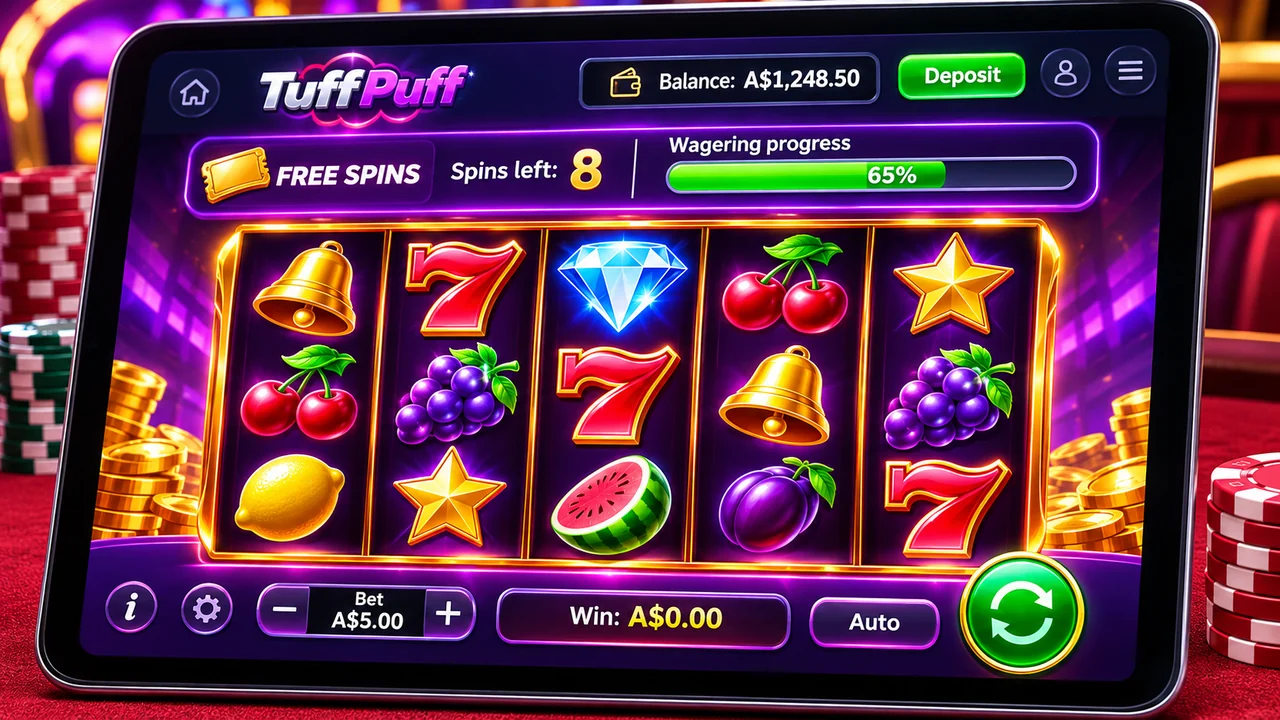
This is the part one-dollar banners leave out. Withdrawal minimums are almost always higher than deposit minimums, often by a wide margin, and they vary by method. A one-dollar account that grows to A$15 can still sit below the floor.
If the floor is out of reach, your practical options are to top up — which ends the one-dollar experiment — or to accept the dollar as spent on entertainment. Both are fine choices, as long as you make them before the first spin. Our withdrawal limit claim check covers how to read the payments section properly.
Used deliberately, a tiny deposit is a useful research tool. It lets you see the cashier, the lobby and the account tools with very little at stake. A sensible order:
The result you are looking for is predictability. If the cashier, the terms and support all tell the same story, that is a good sign for a larger deposit later. If any of them disagree on a one-dollar transaction, they will disagree on bigger ones too. Our session plan adds time and loss limits to the same routine.
The lowest possible deposit is not always the best value. Fixed costs and floors shift the balance as the amount rises.
If your goal is to test whether a site pays, a deposit that can realistically reach the withdrawal floor is more informative than a single dollar. If your goal is only to look around with real money in the account, one dollar does that for the least outlay.

The size of the deposit does not change the legal picture. Under the Interactive Gambling Act 2001, online casino services are prohibited from being offered to people in Australia, and the Australian Communications and Media Authority (ACMA) enforces this, including by having illegal offshore gambling websites blocked. Any site accepting a one-dollar deposit from an Australian is offshore and outside Australian licensing.
That matters even at a dollar, because it means no Australian complaint body for a dispute and no local rules on how your funds are held. Our online casino law in Australia guide sets out the framework, and what an ACMA block means explains what the block list tells you about a site.
If you are reading this for Vegas Now specifically, our Australian evidence file and ACMA block record collect what the primary sources show.
A dollar feels like nothing, so the second and the tenth feel like nothing too. Count deposits, not sessions. Ten one-dollar top-ups is a ten-dollar deposit made in the least efficient way possible, with ten sets of fees.
Assuming the promo appliesDepositing a dollar because a list said “$1 bonus”, without the promotion actually being live on your account, leaves you with a dollar and no spins. Check that the offer appears in your account before paying.
Choosing the method for the minimum, not the recourseA method with a low floor but no chargeback or dispute route is a poor choice if you plan to deposit more later. Pick the method you would want to use for a larger amount, and test that.
Leaving verification for laterIf a small win does cross the withdrawal floor, the first withdrawal will usually need identity checks. Doing them early avoids a frustrating wait. Our KYC preparation guide explains how to send documents safely.
Small stakes make it easy to forget you are gambling with real money. A few settings keep a one-dollar experiment from drifting into something bigger.
These steps sound excessive for a dollar. They are aimed at the second and third deposit, which is where small tests usually turn into real spend.
18+ only. Keep gambling to money you can afford to lose; free, confidential support is available around the clock from Gambling Help Online on 1800 858 858, and our responsible play page lists more options.
A small number of sites accept a one-dollar deposit, usually through a specific promotion or a low-floor method such as crypto. Most casinos set higher minimums. The amount the cashier accepts for your chosen method is the only reliable figure.
Wins are possible, but a dollar covers only a handful of bets, and promotional spins usually carry wagering and a cash-out cap. Treat any one-dollar deposit as entertainment spend, not as a way to build a balance.
The most common reason is a withdrawal minimum above your balance. Other reasons are unmet wagering on bonus funds, a deposit turnover rule, or identity checks that have not been completed.
Crypto often has the lowest casino-side minimum, but network fees and exchange spreads can take a large share of a dollar. It also offers very little recourse if something goes wrong, which matters more than the minimum if you deposit again later.
Usually only a dedicated one-dollar promotion, such as a small batch of free spins. The main welcome package normally needs a higher qualifying deposit, so a dollar will not trigger it.
Rarely. Withdrawal minimums are usually well above a dollar, so the balance is unlikely to reach the floor. A $1 deposit shows you the cashier and the lobby; a deposit that can realistically clear the withdrawal minimum is the better test of payouts.
Advertisement · 18+
A venue has opening hours and a dress code. Online the pokies, the live roulette and the sport are open at any hour, with a demo mode before you stake anything.
See the current offer